
Service
Turnkey e-commerce store development
People add the product to the cart and vanish at the payment step. Stock on the site says one thing, the warehouse says another, and the manager calls back to apologise. The store exists, yet orders still arrive as Instagram messages.
Which architecture fits
The right architecture depends on your catalog's scale
- Up to 500 SKUs — a ready-made platform
WooCommerce or similar. An editable catalog, standard integrations (LiqPay, Nova Poshta, 1C), and an admin panel your content manager can use right away. Launch in 6–8 weeks.
Good fit: a local boutique, a niche store, your first online store without an in-house tech team.More about WooCommerce stores
- 500–10,000 SKUs — headless or extended WooCommerce
A catalog with nested categories, tens of thousands of variants, real-time 1C sync, and advanced filters with no page reload. A more flexible architecture built for growth.
Good fit: a multi-brand store, a chain with physical locations, a catalog with seasonal turnover.
- 10,000+ SKUs or non-standard logic — custom development
Custom pricing logic (B2B accounts, wholesale rates, multiple warehouses), ERP or marketplace integration, headless architecture on Next.js. Timeline from 10 weeks, scope agreed at the brief.
Good fit: a manufacturer with a dealer network, a marketplace, an auto parts store with VIN search.
Prices
How much an online store costs to build in 2026
The price follows catalogue size, the set of integrations and how complex the niche is. Below are the three architectures we work with most often, with a range for each.
- 01Starter storeup to 500 SKUs, WooCommerce or similar78 000 ₴ – 150 000 ₴$1 900 – $3 7006–8 weeks
- 02Growing catalogue500–10,000 SKUs, headless or extended WooCommerce150 000 ₴ – 307 500 ₴$3 700 – $7 5008–10 weeks
- 03Custom build on Next.js10,000+ SKUs or non-standard logic307 500 ₴ – 738 000 ₴$7 500 – $18 000from 10 weeks
| Type | Price, ₴ | Price, $ | Timeline |
|---|---|---|---|
01 Starter store up to 500 SKUs, WooCommerce or similar | 78 000 ₴ – 150 000 ₴ | $1 900 – $3 700 | 6–8 weeks |
02 Growing catalogue 500–10,000 SKUs, headless or extended WooCommerce | 150 000 ₴ – 307 500 ₴ | $3 700 – $7 500 | 8–10 weeks |
03 Custom build on Next.js 10,000+ SKUs or non-standard logic | 307 500 ₴ – 738 000 ₴ | $7 500 – $18 000 | from 10 weeks |
Rate 41 ₴/$. A rush launch adds 15%. You pay in stages. We name the exact price after a 30-minute brief, and while the scope holds, it does not move.
Estimate your projectCase studies
No mockups — live stores with real orders
 Online store
tonKAton
Online store for nail technicians that sells straight from the banner
View project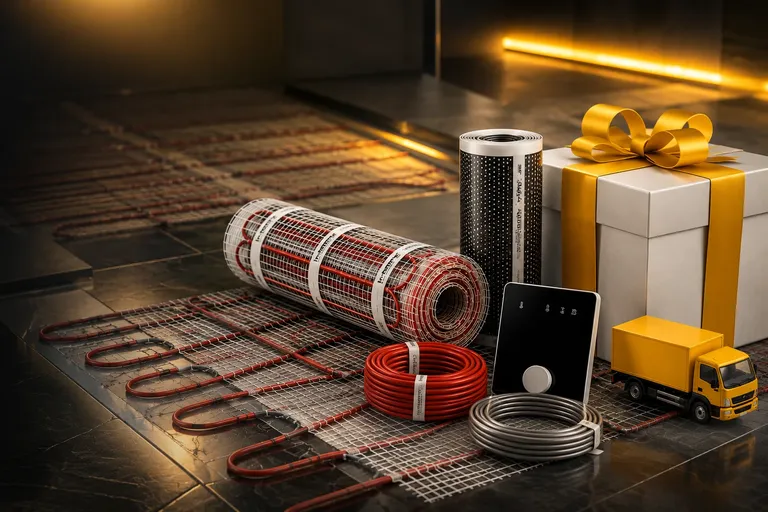 Online store
Intherm
Online underfloor heating store with comparison and gifts
View project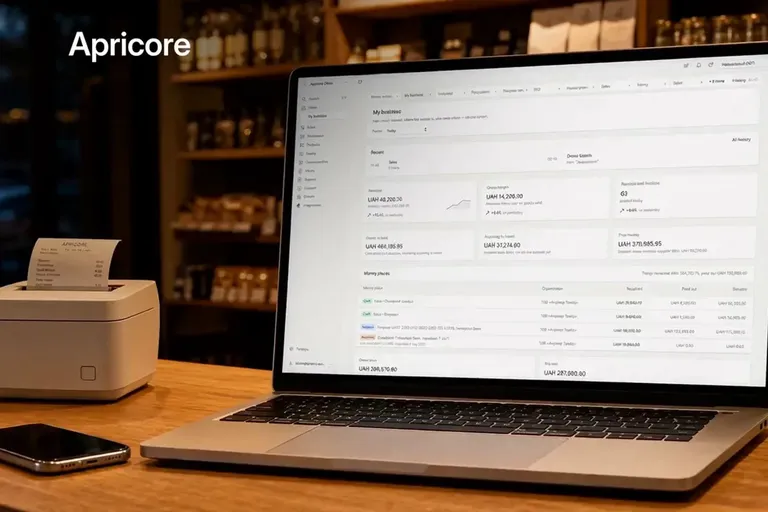 Business accounting
Apricore
Small business ERP with stock, orders and fiscal receipts (RRO)
View project Food brand store
Chumak
Online store that sells the brand’s products direct to buyers
View project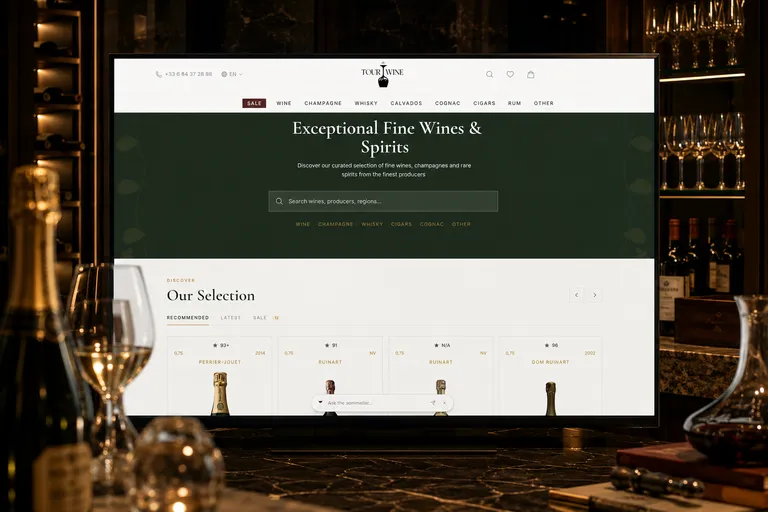 WooCommerce store
Tourdewine
Online store for collectible wines with sales abroad
View project OpenCart store
Gadgik
Online store that guides buyers to the nearest pickup point
View project
Your niche
Your niche has its own mechanics
A clothing store and an auto parts store need different catalogs, filters, and delivery scenarios. Below are the mechanics we've already built for each niche.
- Size + color variants without duplicate listings
- Size charts right on the product page
- 14-day return flow
- Google Shopping feed ready at launch
Recommended stackWooCommerce
Apros CMS included
Our own admin panel — no rental fees, no per-user subscription
30 days of support after launch
Fixes and questions in the first month — free of charge
Stack chosen for the task, not for trends
WooCommerce or a custom build — decided at the brief
Grows without a rebuild from scratch
From 50 products to tens of thousands of SKUs
What's included in every store
Payments, delivery, inventory — the standard scope, not an add-on
Payments
- LiqPay / Fondy — Visa/Mastercard, Apple Pay, Google Pay, installment payments (Monobank, PrivatBank). The gateway switches in settings, no code changes needed.
- Multi-currency support, if you sell abroad.
Delivery
- Nova Poshta API — automatic cost calculation, package tracking in the customer account, SMS notifications. Branch or courier selection on a map, right in checkout.
- Return flow — a form in the customer account, status tracking, tied to the statutory 14-day return law.
Inventory sync
- 1C / CRM — two-way sync: a sale on the site subtracts stock in 1C; a new shipment in 1C adds stock to the catalog. Or KeyCRM, if you don't use 1C. No manually maintaining two systems.
- Product import from Excel or XML feeds, if inventory isn't automated yet.
Ad infrastructure
- Google Shopping feed (XML for Merchant Center) and Meta Catalog (JSON for Facebook/Instagram) — we generate and configure the first sync before launch day.
- SEO catalog structure: clean URLs for categories and product pages, meta tags, product schema markup (schema.org/Product).
- Next.js
- Payload
- Shopify
- WooCommerce
- LiqPay
- Fondy
- Nova Poshta
- PrivatBank
How we work
Five steps from brief to first payment — no surprises
Brief and spec
30 minutes on Zoom: SKU count, niche, integrations needed (1C/CRM, inventory), delivery and return logic. Everything documented. Deliverable: a spec with a sitemap, feature and integration list, budget range, and timeline.
Design
Wireframes for the catalog, product page, cart, checkout, customer account. Three rounds of revisions included in the budget. Deliverable: approved mockups for desktop and mobile, plus a fixed quote for the full scope.
Development and catalog population
In parallel: we build, your content manager uploads products using our template (or we handle the first batch as part of the scope). Weekly staging deploys — you see progress in the browser. Deliverable: a fully functional store on staging with real products and configured integrations.
Integrations and testing
We connect LiqPay/Fondy, Nova Poshta, 1C or CRM. We test with live transactions: real payment, tracking dispatch, returns in the account. Deliverable: a signed test report; every scenario (payment / decline / return) verified.
Launch and handover
Migration from the old site (if any), redirects, GA4 and Google Merchant Center setup. The first 30 days of support are included. Deliverable: a live store, a guide for your content manager, and 30 days of free support.
FAQ
Questions about e-commerce development — and straight answers
Let's talk
Describe your store — we'll tell you what it takes and what it costs

Learn more
Turnkey e-commerce store development: architecture, integrations, niches
Architecture depends on the catalog, not the budget
E-commerce development isn't "a website with a cart." The technical complexity here isn't the number of pages — it's the operational logic: product variants, real-time inventory sync with the warehouse, return flows, product feeds for advertising. A 2,000-SKU clothing store and a 500,000-listing auto parts store are two completely different products. The first is built on WooCommerce or similar in 6–8 weeks. The second needs its own VIN-search engine, supplier feeds (RDM, Microcat), and a dedicated full-text search subsystem. We build both formats — and at the brief we'll tell you honestly which stack solves your case more cheaply and reliably.
The integrations that keep a store cheap to maintain
The key integrations for e-commerce in Ukraine are a well-established set. Payments: LiqPay or Fondy for Visa/Mastercard, Apple Pay, Google Pay, installment payments through Monobank or PrivatBank. Delivery: Nova Poshta API with branch or courier selection on a map right in checkout, tracking in the customer account, and automatic SMS. Sync with 1C or a CRM (KeyCRM, Checkbox) — so you're not maintaining two inventory systems in parallel. Without these three blocks, a store will technically work, but it will be expensive to run day-to-day. Website development →
Catalog SEO structure — built in from day one, not "later"
Catalog SEO structure is built in from day one, not added "later." Every category gets its own URL with a keyword slug, its own title and description, and schema markup (schema.org/Product for product pages, schema.org/BreadcrumbList for navigation). The Google Shopping feed is XML in Merchant Center format, updating automatically when price or stock changes. This means shopping ads can go live on launch day. SEO for stores →
Niche-specific mechanics where templates fall short
Niche mechanics are where generic templates fall short. A clothing store without size charts on the product page sees higher return rates. A furniture store without a measurement-visit request and installment payments loses customers who don't decide on the spot. A flower store without 2–3 hour rush delivery and time slots is just a pretty website, not a service. Over 10 years we've launched e-commerce stores in nine niches — clothing, cosmetics, footwear, furniture, auto parts, toys, home appliances, flowers, groceries — and each has its own map of must-have features. Visit your niche's page for the specific list, with the reasoning behind each item.
Ad infrastructure, built alongside development
A store's ad infrastructure is built alongside development. Google Shopping feed, Meta Catalog, Google Analytics 4 with e-commerce tracking (product views, add-to-cart, purchase) — all connected before release. If you already run an ad account, we launch on opening day. If not, we'll show you how to set one up. The cost of the ad launch itself isn't part of the development budget, but Google Ads and SEO promotion for stores are separate service lines at Apricode. Google Ads →
Turnkey e-commerce development means you arrive with an idea and a niche, and leave with a live store: payment gateways connected, Nova Poshta configured, a populated catalog, and a guide for your content manager. No "rework" three months later, no "that feature wasn't included." To check whether we understand your task correctly, get a ballpark budget on our pricing page or tell us the details on a call — in 30 minutes we'll give you a range for timeline and cost. Get an estimate →