CRM & automation
GuideCRM for Small Business: What It Is and When You Need One
What a CRM for small business actually does, when a spreadsheet is still enough, and how to map your process before you pick a platform.
 Bohdan Kononenko12 min read
Rolling out a CRM for small business doesn't start with picking a platform. It starts with getting your customer process ready. You need to know where contacts are stored, how deals move, who logs conversations, and who keeps track of the team's next steps. A CRM doesn't replace sales, service, or management decisions. It solves a different problem: customer data stops living in personal chats, a manager's notes, or scattered spreadsheets. The owner sees the path from inquiry to order. A manager knows who needs a reply and when. The service team doesn't open every conversation with "Remind me, what happened on your end?"
Not every business needs this preparation at the same moment. If inquiries are few, the process is simple, and one person controls all the data, basic record-keeping is sometimes enough. If leads get lost between channels, tasks have no owner, and you have to dig through message threads to find a customer's history, it's time to describe your process before rolling out a CRM. Don't start with a list of modules. First map the customer journey and the points where your team loses information.
Which processes should you prepare before rolling out a CRM?
A CRM connects customer data. A CRM is a working system that ties a customer's contact details, inquiries, deals, tasks, and communication history into one process. The point is that every next step has context: who reached out, what was agreed, what needs to happen next, and who owns it.
The customer record holds contact details and whatever data the work requires. Deals, emails, calls, comments, and tasks are linked to it. When a customer comes back, the employee sees earlier agreements and where things stand. The process depends less on one person's memory.
A CRM is not accounting software. It doesn't keep the books in place of a dedicated system. It isn't the website that receives inquiries or the messenger where they show up. The website and messengers can be entry channels. The CRM is where inquiries turn into managed work.
What sets a CRM apart from an ordinary spreadsheet is the links between data. A spreadsheet easily holds a list of contacts. It's much harder to see which deal has stalled, who needs a follow-up after a call, or what the previous manager already promised.
The system itself doesn't create demand or rescue a chaotic process. If the team hasn't agreed on what counts as a new inquiry, when to create a task, and who closes the deal, the mess simply moves into a different interface.
Where small businesses lose leads, orders, and context
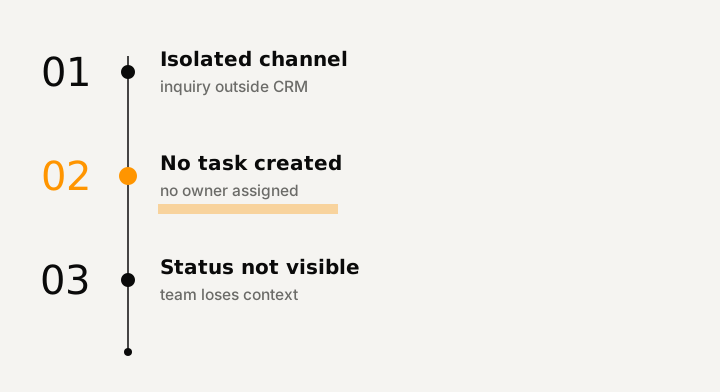
Every inquiry needs an owner. Losses begin when an inquiry lives in a channel instead of a process. A customer writes in a messenger, an employee sees the message among other chats and puts off replying. Then the conversation scrolls up out of sight. The request goes unanswered not because anyone turned the customer down, but because it never got an owner or a next step.
Another common situation: an agreement exists only in a message thread or in a manager's head. After a call, someone needs to prepare a proposal, clarify details, or hand the request to another role. If the agreement never became a task, it depends on whether a specific person remembers it. The owner ends up collecting status updates from chats instead of seeing the deal move through stages.
Context also gets lost when a customer is handed off. A new manager can't see earlier requests. The service team doesn't know what was promised before the sale. The customer gets asked again about details they already explained. This isn't a politeness problem. The communication history is tied to one employee or one channel.
When data is spread across messengers, email, spreadsheets, and personal notes, it's hard to pass on without losing something. It's just as hard to tell where a deal stopped: at the reply, the clarification, the approval, or the handoff to service.
If some of your inquiries arrive through a messenger, think through how to link each conversation to a customer record and a task. That can be part of a solution such as Telegram bots for business, but the channel alone doesn't replace the rules for handling the request once it arrives.
What a CRM is made of and how its modules work

The modules work together. A CRM works as a connected chain, not a set of separate screens. The contact is the foundation of the record. A deal, tasks, calls, emails, and comments are attached to it. The employee sees the current state of work with the customer instead of searching for information in several places.
The contact database stores the data needed for communication and service. Keep only the fields your team actually uses. Extra fields turn filling out the CRM into a formality.
The sales pipeline shows a deal's path from a new inquiry to the end of the work. Each stage should name a real action or state, not an abstract label. When a deal moves between stages, the system can prompt the next step: reply, clarify details, prepare a proposal, or hand the customer over to service.
Tasks turn agreements into a concrete action with an owner. The interaction history records a call, an email, a message, or an internal comment. Reporting pulls process data into an overview for the owner. It shows how deals move and where work stalls.
| Option | When it fits | What it gives you | Limitations |
|---|---|---|---|
| Simple record-keeping | One person runs the process, and the customer journey rarely passes between roles | A contact list and basic notes | Hard to track next steps and deal history |
| Basic CRM | You need customer records, deals, and tasks | Links the contact to the sales process | May not cover external inquiry channels |
| CRM with integrations | Inquiries come in from different channels | Helps pull communication into one workflow | Needs agreed rules for data and access |
| Custom system | Standard logic doesn't match how the business works | Accounts for your own roles, stages, and scenarios | Requires dedicated design and ongoing support |
When you need a CRM and when simple record-keeping is enough
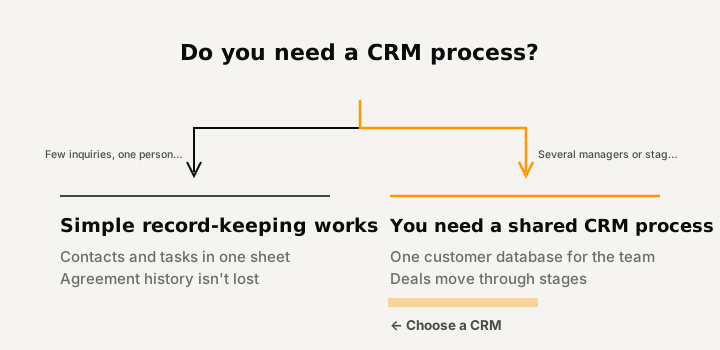
A CRM is for processes that change hands. You don't need a CRM because of team size or inquiry volume. It makes sense once the customer journey stops being a direct conversation between one person and one client and becomes a process with channels, roles, agreements, and next steps.
A sign you need a CRM: inquiries arrive in different places, and the team has to pull them into one queue. Another sign: a customer is passed between a manager, the person doing the work, and service. Then it matters to keep not just contact details, but also the reason for the inquiry, the agreements, the current stage, and the action a specific person has to take.
A system also makes sense when the sale doesn't end with the first reply. There are clarifications, a proposal, an approval, delivery, after-sale service, or a repeat contact. Without a shared process, each of those transitions rests on an employee's memory.
Simple record-keeping may be enough if one responsible person runs the whole process. Inquiries come through one clear channel. Data doesn't have to pass between roles. The next step is obvious, and the customer's history is easy to reconstruct without searching several tools.
How to prepare your processes for a CRM rollout
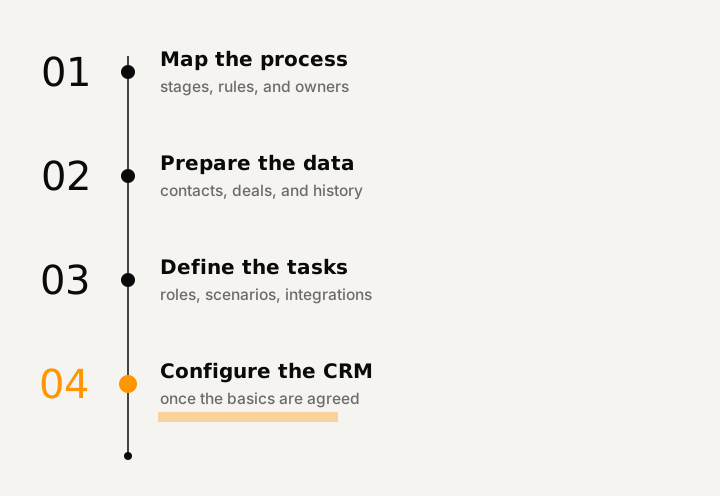
Start by mapping the inquiry path. Begin with a map of your channels. List every place requests come from: the website, email, phone, messengers, forms, or referrals. For each channel, decide who picks the inquiry up and where it becomes a customer record.
Next, define what goes into the record. Keep contact details, the reason for the inquiry, key agreements, and the data the next role needs. A field should exist for an action, not because it can be added.
Name deal stages after a real action or state: request received, details clarified, proposal sent, work handed off to service. Assign an owner to each stage. Otherwise a deal can change status with nobody responsible for the next step.
Separately, write down the events that trigger a task. A new inquiry needs a reply, an approval needs a handoff to the team doing the work, and a finished job needs a follow-up contact. That way an agreement doesn't stay a line in a message thread.
List your integrations before setup, too: which channels should pass data in, what exactly needs to be linked to the record, and who is responsible for errors in the process. Only then do you configure fields, access rights, and automations.
If you need help designing that setup, the next step is CRM implementation.
How a CRM changes the work of owners, managers, and the service team
Each role sees its own context. A CRM splits work by role. The owner sees how deals move and where the process has stalled. The manager works with current tasks and the next step. The service team receives the customer along with the agreements, not a short "handing this over to you" message.
The owner doesn't have to gather status updates from personal chats. The system shows which stage each deal is in, where there's no owner, or where a task never turned into action. That doesn't replace a management decision. But you no longer have to piece the picture together from fragments of conversations.
For a manager, the CRM is a work queue. They open the customer record and see earlier inquiries, agreements, and open tasks. The next step should be tied to a specific deal, not left in someone's memory or a note in a messenger.
The service team carries the work on after the sale. They don't need every piece of data in the record, only what explains the request, the agreed scope of work, and important terms. The customer doesn't have to repeat the context to each new person.
Set up access by role. A manager doesn't necessarily need to see service's internal notes. The person doing the work doesn't need all the commercial data. Giving everyone the same access creates noise and raises the risk of mistakes.
How to choose a CRM for your process, not for the platform's marketing
Test the system on your own scenario. Choose a CRM based on how a customer inquiry moves through your business: from the first request to the sale, service, and repeat contact. A list of modules in a sales deck explains very little. What matters is whether the system can support your team's real actions without side spreadsheets, chats, and manual copying of data.
Start with the type of work. A sale with approvals needs deal stages and tasks between them. After-sale service needs context handed to the person doing the work. Repeat inquiries need a full communication history. If the system can't fit your process without workarounds, extra features won't make up for it.
Check the following:
- which roles will work in the system and what data they need;
- where inquiries come from and whether they can be linked to a customer record;
- which fields the work requires and which would overload the record;
- what the deal stages look like and whether you can assign an owner to each;
- which integrations you need for the website, email, phone system, or messengers;
- whether you can set access rights without opening every record to every user;
- who will maintain the system after launch.
Find out separately whether you can export your own contacts, deals, tasks, and interaction history. Your customer data should stay available to you, even if you later change tools or the way you work.
Look for places where work would be duplicated. If a manager creates a deal in the CRM and then re-enters the same details in another system, the process didn't get simpler. It gained one more point of failure.
Ask for a demo on your own scenario, not a ready-made template. A new request should become a contact and a deal. Then a task should appear. After that, the customer is handed off to service, and a repeat inquiry lands back in their history. That route shows whether the system fits your work, not someone else's sales deck.
What to check before launching a CRM
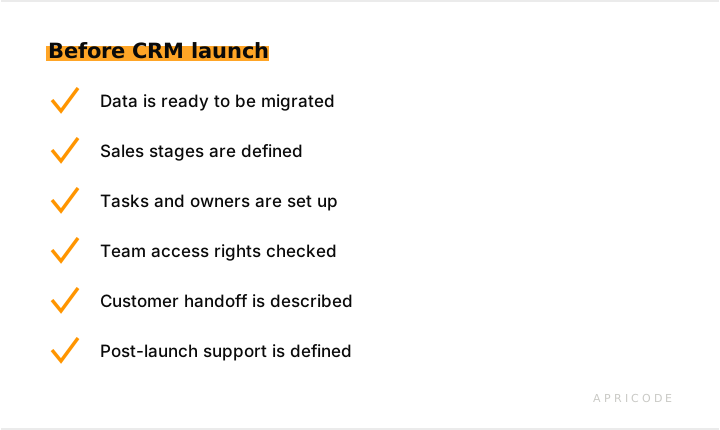
Set the rules before launch. Launch a CRM after the team has agreed on the rules for working with customer data. The system won't settle an argument about who owns a deal, what counts as an agreement, and when a customer can be handed to another role.
Before launch, write down:
- who is responsible for the customer record, the deal, the process stage, and keeping data current;
- the rule for creating a new contact and how to avoid duplicate records;
- which fields are required for the work and which don't need to be filled in without a reason;
- under what conditions a deal can be closed, moved, or reopened;
- when a task is created, who receives it, and what counts as done;
- which roles have access to commercial, service, and internal data;
- how a customer is handed from a manager to the service team along with the context;
- who fixes configuration errors and maintains the rules after launch.
It helps to run this list against a specific industry scenario. The article CRM for a beauty salon: bookings, stylists, and returning clients shows how the process changes when it includes a booking, a specialist, and a repeat visit.
Conclusions
Preparation pulls the customer process together. Preparing for a CRM rollout brings your work with customers into one shared loop: inquiries, deals, tasks, agreements, and follow-up service no longer drift apart across chats and personal notes. But a CRM isn't a button that creates sales on its own or fixes uncoordinated work.
Choosing a system doesn't start with a list of modules. First sketch the customer journey, define the roles, the inquiry channels, and the data your team can't move a case forward without. Then check whether the CRM supports that exact route.
A CRM for small business doesn't need features that don't help a specific action: create a deal, assign a task, pass on context, or return to an earlier agreement. Industry differences matter too: CRM for dental clinics: patient records, reminders, and insurance shows how record-keeping changes depending on how the business works.
Frequently asked questions
Answers about preparing for a CRM rollout.
Where should a small business start with a CRM rollout?
Start by describing how you work with customers: inquiry channels, roles, the data in the record, deal stages, and next steps. Identify where requests, agreements, or context get lost. Only then is it worth configuring the system.
When does a small business need a CRM?
You need a CRM when inquiries come in through different channels, customers are passed between people, or a sale goes through several stages. It makes sense when there are repeat inquiries, tasks get lost without an owner, and you have to search message threads for the history of what was agreed.
Does a business with a small team need a CRM?
A small team needs a CRM not because of its size but because of how complex the process is. If one person keeps simple records and doesn't hand customers to colleagues, a spreadsheet may be enough. If context is scattered across channels, a system helps bring it into one workspace.
How is a CRM different from a customer spreadsheet?
A spreadsheet stores a list of data, while a CRM runs the process of working with a customer. In a CRM, the contact is linked to a deal, a stage, tasks, an owner, and earlier inquiries. A spreadsheet can be enough for simple record-keeping, but it doesn't replace handing off cases and keeping track of next steps.
How do you choose a CRM for small business?
Choose a CRM after you've described your customer process. Define the roles, inquiry channels, data in the record, deal stages, required integrations, and access rights. Separately check whether you can export your own data and whether you'd have to duplicate records across systems.
What data should you move into a CRM?
Move only the data your team needs for current work with customers: contacts, active deals, agreements still in force, open tasks, and the information service needs. Outdated records with no working value are better left behind rather than moved just to keep the archive complete.
Was this article helpful?